

You’re probably already excited about the Bosch GMM1-15 Pinless Moisture Meter. Well, hold on, Bosch has another one.
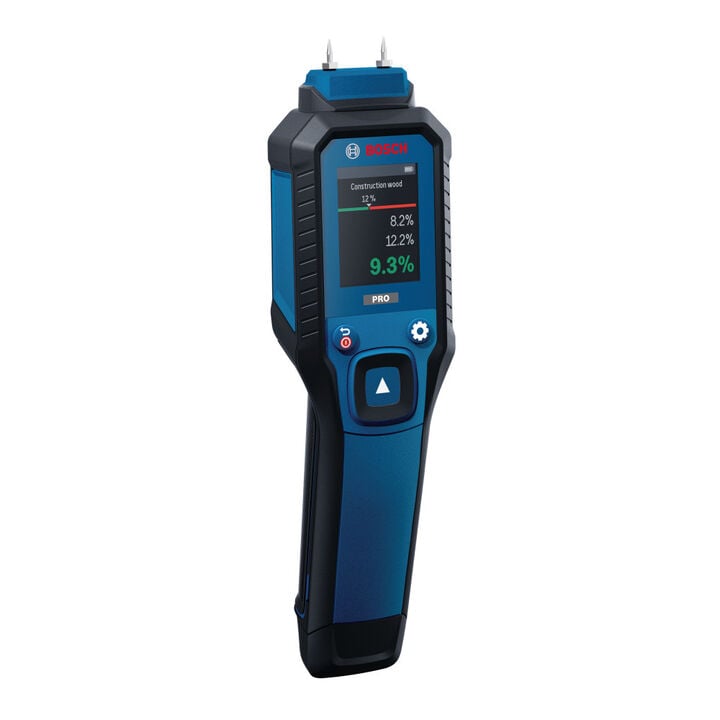
The Bosch GMP1-13 Pin-Type Moisture Meter offers many of the same convenient features, but it takes measurements using pins that make direct contact with the material. This makes it a practical choice for woodworkers, flooring installers, painters, building inspectors and facility managers who need targeted readings from specific locations.
What Makes It Convenient?
The GMP1-13 is preprogrammed for 37 types of wood and 10 construction materials. Select the material, place the pins into the surface and check the high-contrast display. There is no complicated setup or unnecessary guesswork.
Here is what makes the job easier:
- Pin-type moisture detection: Take targeted measurements from specific points in wood and other building materials.
- 47 material settings: Quickly select from 37 wood types and 10 construction materials for measurements optimized to the material.
- Automatic self-test: The meter runs an internal check to help optimize its performance and accuracy.
- Color-coded threshold scale: Adjustable thresholds and color visualization make results easier to interpret.
- High-contrast LCD display: Clearly review measurements without struggling to read the screen.
- Magnetic protective cap: The cap stores conveniently underneath the meter during use, so it is less likely to disappear.
- Flexible power options: Run it on the included AA batteries or the Bosch GBA37V10 3.7V lithium-ion battery, sold separately.
- IP65-rated housing: Rubber reinforcement and dust-tight, water-resistant construction prepare it for demanding jobsites.
Pin-Type vs. Pinless: What Is the Difference?
The GMM1-15 Pinless Moisture Meter uses a non-damaging electromagnetic field to scan materials without making holes. It is a good option for quickly checking finished surfaces or covering a larger area.
The GMP1-13 Pin-Type Moisture Meter uses physical pins for a targeted reading at a specific point. It may leave small marks, but that direct contact can be useful when working with lumber, flooring or materials that will eventually be painted, covered or installed.
Why Own Both?
The two meters complement each other. Use the pinless GMM1-15 to scan a surface without causing damage and identify areas that deserve a closer look. Then use the pin-type GMP1-13 to take a targeted follow-up measurement where small pin marks are acceptable.
You might not need both for every project, but those who regularly inspect different materials will appreciate having options. One provides convenient, non-damaging scanning. The other provides focused measurements exactly where you need them.
Together, they give you a more flexible moisture-detection setup, and make it easier to choose the right testing method for the job.


0 Comments