

Gas generators have ruled the jobsite for decades. They're loud, they smell, they require maintenance and until recently, they were irreplaceable.
That's changing fast.
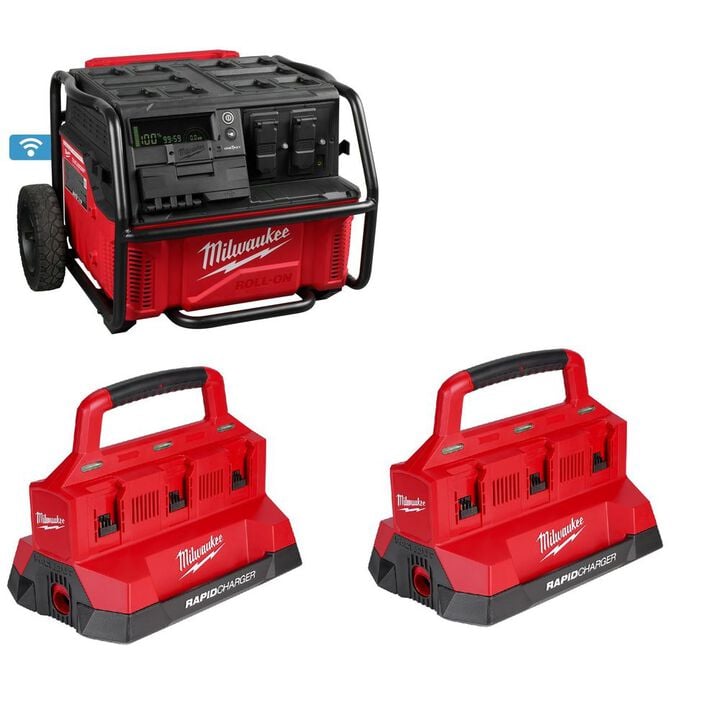
The launch of high-capacity portable power stations like the Milwaukee ROLL-ON 7200W has contractors asking a question that would've sounded absurd five years ago: Can I finally ditch the gas generator entirely?
In 2026, for a growing number of jobsites, the answer is yes.
What's Actually Changed?
Battery technology has been creeping toward this moment for years. But the ROLL-ON 7200W isn't an incremental upgrade, it's a category shift.
- 7,200 peak watts / 3,600 running watts: Enough to power multiple tools simultaneously.
- Rolls to where you need it: No lifting, no wrestling a generator off a truck bed.
- Charges from a standard outlet, solar panels, or a vehicle: Flexibility gas can't match.
- Zero emissions, zero noise: More on why that matters below.
This isn't a jobsite phone charger. It's a legitimate power infrastructure solution.
Gas vs Battery: The 2026 Cost Benefit Breakdown
Upfront Cost
Gas generators in the 3,500–7,000W range typically run $500–$1,500. A unit like the Milwaukee ROLL-ON sits at a higher entry price. No question.
But the total cost picture looks different over time.
Fuel & Maintenance (Gas Generator)
- Average gas consumption: 0.5–1 gallon/hour at moderate load.
- At current fuel prices, that's $2.50–$5.00/hour just to run it.
- Add oil changes, spark plugs, carb cleanings, and seasonal storage prep.
- A well-used generator realistically costs $400–$800/year in operating expenses for a busy crew.
Charging Cost (Battery Power Station)
- A full charge on a large-capacity unit costs roughly $1.50–$3.00 in electricity.
- No fuel runs, no maintenance schedule, no ethanol damage to worry about over winter.
- Operating cost advantage compounds significantly over 2–3 years.
The Maintenance Factor
Gas generators need attention. Battery power stations largely don't. For contractors running lean crews, that's not a small thing. It's hours back in your week.

The Real Advantage Nobody's Talking About Enough
The cost math is compelling but these three factors are pushing contractors over the line faster than ROI calculations.
No More Noise Complaints
Residential remodels, urban commercial work, HOA-governed neighborhoods noise restrictions are tighter than ever. A gas generator running at 50–85 dB can halt a job or trigger fines. Battery power stations run near-silently. That's not a comfort feature. It's a business protection feature.
Work Anywhere Including Indoors
Carbon monoxide kills. Gas generators cannot be run indoors, in garages, or in partially enclosed spaces full stop. Battery power stations produce zero emissions, which means powering tools in basements, interior renovation spaces, or enclosed commercial builds without safety compromises or ventilation requirements.
Run a Whole Crew Off One Unit
A 7,200W peak output station can simultaneously run a miter saw, a jobsite light, a charger bank for cordless tools, and a radio without breaking a sweat. For crews that previously needed a generator plus a separate charging setup, consolidating to one rolling unit simplifies the entire power equation on site.
Gas generators aren't dead everywhere. Remote sites with no charging infrastructure, multi-day projects far from power gas still has a role. But for the typical contractor working in and around developed areas? The case for keeping that old generator is getting harder to make.
Roll-On Supports All Trades in All Stages of the Job
Before utility power arrives (Pre Power), a portable battery station keeps your crew moving without running extension cords to a noisy gas generator. Once the building is up but not yet energized (Temp Power), it rolls right inside, no fumes, no restrictions. As trades finish their work in an occupied or near-complete space (Finished Power), near-silent operation means no disruptions to tenants, staff, or inspectors. And when the job takes you somewhere power simply doesn't exist (Mobile Power), it loads onto a trailer or utility vehicle and goes with you. One unit. Every phase of the build.
The quiet jobsite isn't a future concept anymore. It's available right now and it's rolling onto job sites near you.



0 Comments