

Listen up: if you’ve been on a job site for more than a week, you know the drill. We take pride in the grit, the sawdust, and the long hours. But we’re also entering a new era where "toughing it out" is being replaced by "working smarter." We’re about to break down a shift in the industry that is going to make your site safer, your workflow more efficient, and—most importantly—ensure you’re still in the game for the long haul.
Remember the Good Old Days? Yeah, They Were Dangerous.
It isn’t just about the guys in the suits at OSHA tightening the screws to hand out fines. There is a fundamental shift happening in how we work. The industry is realizing that the best way to keep people safe isn't just by telling them to "be careful"—it's by making the tools smart enough to handle the danger for them.
We’ve moved past safety being something you just strap on at the start of a shift. We are now in the era of Engineered Safety. This means the protection is built directly into the tool’s DNA. We’re talking about high-level tech—sensors, gyroscopes, and braking systems—that react faster than any human ever could. It’s about working smarter, staying compliant, and ensuring that "going home in one piece" isn't left to luck.
Your Tools Are Getting an IQ Boost (And Your Bosses Are Loving It)
Consider this: your phone can predict your lunch order with frightening accuracy, yet for decades, power tools have remained largely "dumb" machines—relying entirely on the user's reflexes to stay safe.
That era is officially over.
The latest wave of equipment has shifted the focus from raw power to intelligent design. We are seeing a move toward tools that don't just work harder, but work smarter—incorporating sensors and logic that can detect a hazard and intervene before an accident ever occurs. It’s no longer about reacting to a mistake; it’s about a tool that is engineered to stop trouble before it starts.
We’re talking:
- Active Braking Systems: That grinder is trying to take your arm off when it binds up? Nope. Electronic brakes slam it to a halt faster than you can say "OSHA violation."
- Anti-Rotation Sensors: Your drill decides to twist your wrist into a pretzel? Not on its watch. Sensors cut the power before you’re doing the "broken wrist" dance.
- Built-in Dust Suckers: Silica dust? That silent killer that’s worse than a bad hangover? Modern tools come with shrouds and vacuums that gobble up that nasty stuff right at the source, keeping your lungs cleaner than a freshly-sanded floor. It’s like having a tiny, angry Roomba attached to your saw, but for dust.
This isn't just fancy talk; this is the future. It's about keeping you out of the emergency room and out on the job.
DEWALT Stepped Up to the Plate: Meet Perform & Protect™
While other manufacturers are still playing catch-up, DEWALT has leaned into this shift by launching the Perform & Protect™ line. This isn't just a marketing label or a new coat of paint; it’s a specific certification that sets a high bar for job site safety.
DEWALT has essentially cracked the code for high-performance equipment that prioritizes user longevity. By integrating advanced technology into their most powerful tools, they’ve created a lineup that meets the industry’s strictest demands without sacrificing the torque and speed we rely on.
The Perform & Protect™ seal is their commitment to backing the worker in three critical areas:
- CONTROL: Ever had a drill try to spin you into orbit? Their E-CLUTCH® and Kickback Brake are like a superhero reflex, stopping the tool instantly when things get squirrelly. No more busted wrists or surprise trips to the ER.
- DUST CONTAINMENT: Remember that silica dust we talked about? DeWalt’s got you covered with Table 1-compliant shrouds that practically inhale the dust before it gets anywhere near your lungs. Breathe easy, buttercup.
- VIBRATION: You know that buzzing feeling in your hands after a long day with a demo hammer? That’s not just fatigue; that’s your body slowly getting wrecked. SHOCKS Active Vibration Control® slashes that vibration, saving your hands from long-term damage and letting you grip that cold one at the end of the day without a tremor.
Basically, DeWalt is making tools that are tough as nails and smart enough to keep you out of harm's way. It means less time stressing about safety checks and more time actually getting the job done.
The Near Future: Why "Optional" Safety is Phasing Out
If you’re waiting for a convenient time to upgrade, you might want to check the calendar. We are rapidly approaching a point where these engineered safety features won’t just be a "nice-to-have" or a luxury—they will be the baseline requirement for stepping onto a professional job site.
Regulatory bodies like OSHA are shifting their focus. In 2026 and beyond, the emphasis is moving toward higher enforcement of the "Fatal Four" and stricter silica dust standards. General contractors and insurance providers are already demanding proof of "competency and control," not just a checkbox on a safety form. Using a tool that lacks an active braking system or integrated dust extraction is becoming a liability that many site supervisors simply aren't willing to risk.
Leave a comment
Please follow our Community Guidelines and be kind!



Check out Perform & Protect Tools Here.
DEWALT 60 V MAX In-Line Stud & Joist Drill with E-Clutch System Kit

DEWALT 60 V MAX In-Line Stud & Joist Drill with E-Clutch System Kit
Brand: DEWALT
SKU: DCD470X1
DEWALT Carbon Fiber Hammer Tacker

DEWALT Carbon Fiber Hammer Tacker
Brand: DEWALT
SKU: DWHT75900
DEWALT 5in Angle Grinder with Kickback Brake No Lock On

DEWALT 5in Angle Grinder with Kickback Brake No Lock On
Brand: DEWALT
SKU: DWE43214N
DEWALT 60V MAX 1-3/4in SDS MAX Brushless Combination Rotary Hammer Kit
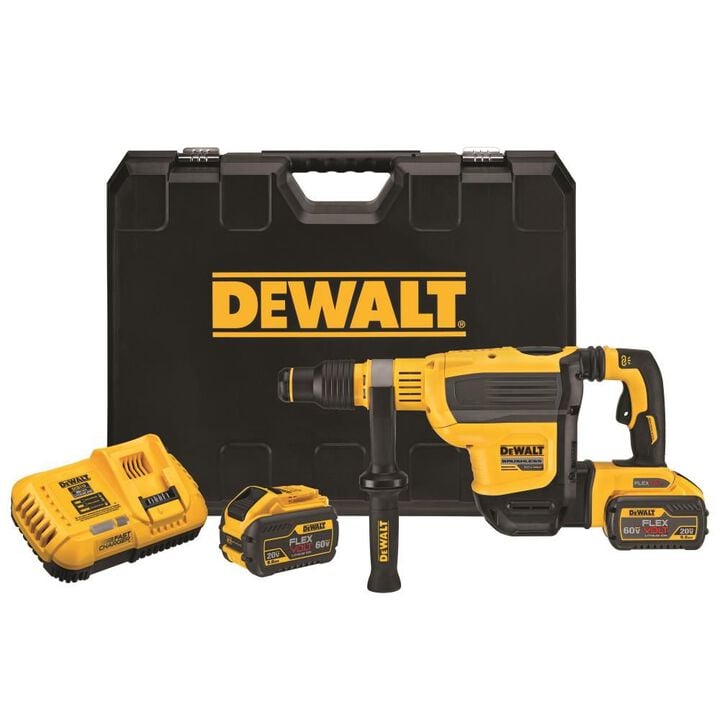
DEWALT 60V MAX 1-3/4in SDS MAX Brushless Combination Rotary Hammer Kit
Brand: DEWALT
SKU: DCH614X2


1 Comments